
Strategic litigation and the rights of disaster-displaced persons
Matthew Scott

4 May 2026
When the Nansen Initiative was launched in October 2012, I was one month into a PhD project designed to explore how strategic litigation might advance the protection of persons displaced across borders in the context of disasters and climate change. Entering academia from refugee legal practice, I was interested in exploring how legal argument might extend States’ non-refoulement obligations. Non-refoulement is the term used in the 1951 Convention Relating to the Status of Refugees to refer to the obligation not to enforce the return refugees to countries where they have a well-founded fear of being persecuted. A similar non-refoulement obligation under international human rights law has evolved through decisions by courts and UN treaty monitoring bodies. Inspired by examples of how litigation had increased protection from refoulement, for instance in relation to women facing gender-based violence, my belief was that a strategic litigation initiative could help to address the ‘protection gap’ facing disaster-displaced persons. I explained what I meant by strategic litigation in a 2015 contribution to Forced Migration Review, namely, that strategic litigation aims to ‘achieve significant changes in the law, practice or public awareness using methods such as the bringing of test cases to court, submitting amicus curiae briefs in ongoing cases, consistently advancing arguable points across a range of similar cases over time and so forth’.
An early part of my research involved speaking with lawyers in the United Kingdom and Sweden about cases they may have litigated and approaches that could help to address the ‘protection gap’ resulting from the lack of express recognition of climate change or environmental factors in the Refugee Convention and other instruments that preclude refoulement. Although one Swedish lawyer recalled having (unsuccessfully) relied upon a distinctive domestic disaster displacement provision, others struggled to formulate a scenario where a person could have any prospect of succeeding in a protection claim based on adverse environmental conditions.
Concluding that the timing was premature to explore strategic litigation, I went on to analyse more than 200 cases in which individuals had sought international protection in the context of disasters and climate change. Cases were brought typically by unrepresented claimants who presented facts without a persuasive legal argument. Judicial decisions often reflected assumptions about disasters and the adverse impacts of climate change that social scientists had moved beyond decades earlier. Decisions typically frame adverse environmental impacts as misfortune devoid of the kind of human agency needed to establish a link to the international protection regime.
The situation has changed dramatically since then, not least due to the pioneering work of the Nansen Initiative and its successor, the Platform on Disaster Displacement (PDD). The Nansen Initiative’s development of the Protection Agenda, which the PDD has sought to implement, has certainly shaped this trajectory. The Protection Agenda focused on the priorities articulated in paragraph 14(f) of the Cancun Adaptation Framework, namely, to ‘enhance understanding, coordination and cooperation with regard to climate change induced displacement, migration and planned relocation, where appropriate, at the national, regional and international levels’. Although neither this paragraph, nor the Protection Agenda, drew attention to litigation specifically, the acknowledgment of displacement led the latter to emphasize the importance of international refugee law and international human rights law, and the role of the judiciary in articulating the scope of international protection (e.g. paras 39 and 55). As such, this laid important foundations for the litigation that is starting to gain momentum.
The Protection Agenda also contributed to changing the narrative away from environmental determinist notions of ‘climate refugees’ towards attentiveness to context-specific mobility dynamics within and across international borders. This has helped to deepen analysis of the kinds of circumstances in which existing law applies, and to broaden the scope of attention to dimensions of displacement that are relevant from a strategic litigation perspective. Additionally, the Protection Agenda’s emphasis on climate adaptation and disaster risk reduction points towards States’ obligations to prevent displacement, protect people during displacement and facilitate durable solutions, whether or not people cross international borders.
International protection litigation
In October 2025, at a London conference devoted exclusively to litigating climate displacement cases, I had the opportunity to interact with more than 100 lawyers, some of whom were already engaged in strategic litigation initiatives. A global toolkit has been developed and new national projects are underway. The International Association of Refugee and Migration Law Judges has addressed the topic in multiple meetings. The Global Strategic Litigation Council now hosts a Climate Mobility Case Database to support legal action by its 600+ member organisations. How did we get here?
Part of the answer is that more lawyers and judges know what climate-related displacement is, and some also appreciate that these kinds of cases have started to become arguable. Bruce Burson’s contribution to this blog series has highlighted how international protection law has been expanded through litigation. Although he acknowledges the relevance of his 2013 decision in AF (Kiribati) and points to the influence of the Nansen Initiative consultations on his approach, he understates the significance of this decision in reframing refugee legal doctrine in this context. Before this decision, the 1997 obiter dictum of Dawson J in A v Minister for Immigration and Ethnic Affairs was often cited with approval. It asserted that ‘[n]o matter how devastating may be the epidemic, natural disaster or famine, a person fleeing them is not a refugee within the terms of the Convention’. The innovation reflected in AF (Kiribati) was the assertion, reflective of the insights shared during the Nansen Initiative consultations, that ‘generalised assumptions about environmental change and natural disasters and the applicability of the Refugee Convention can be overstated … . Care must be taken to examine the particular features of the case’ (para 64). This approach profoundly influenced my own research, and it is reflected in UNHCR’s 2020 Legal Considerations regarding Claims for International Protection Made in the context of the Adverse Effects of Climate Change and Disasters.
The extensive country of origin information considered in AF (Kiribati) was influential in shaping how the case was ultimately determined when it was considered by the UN Human Rights Committee (in Teitiota v New Zealand). Arguably, the Committee’s finding that States’ non-refoulement obligations can be engaged where adverse conditions made worse by climate change contribute to the denial of the right to life with dignity would not have been possible without the granular, context-specific approach pioneered by the Nansen Initiative.
Beyond international protection: Litigating to prevent, prepare for and resolve internal displacement in the context of disasters and climate change
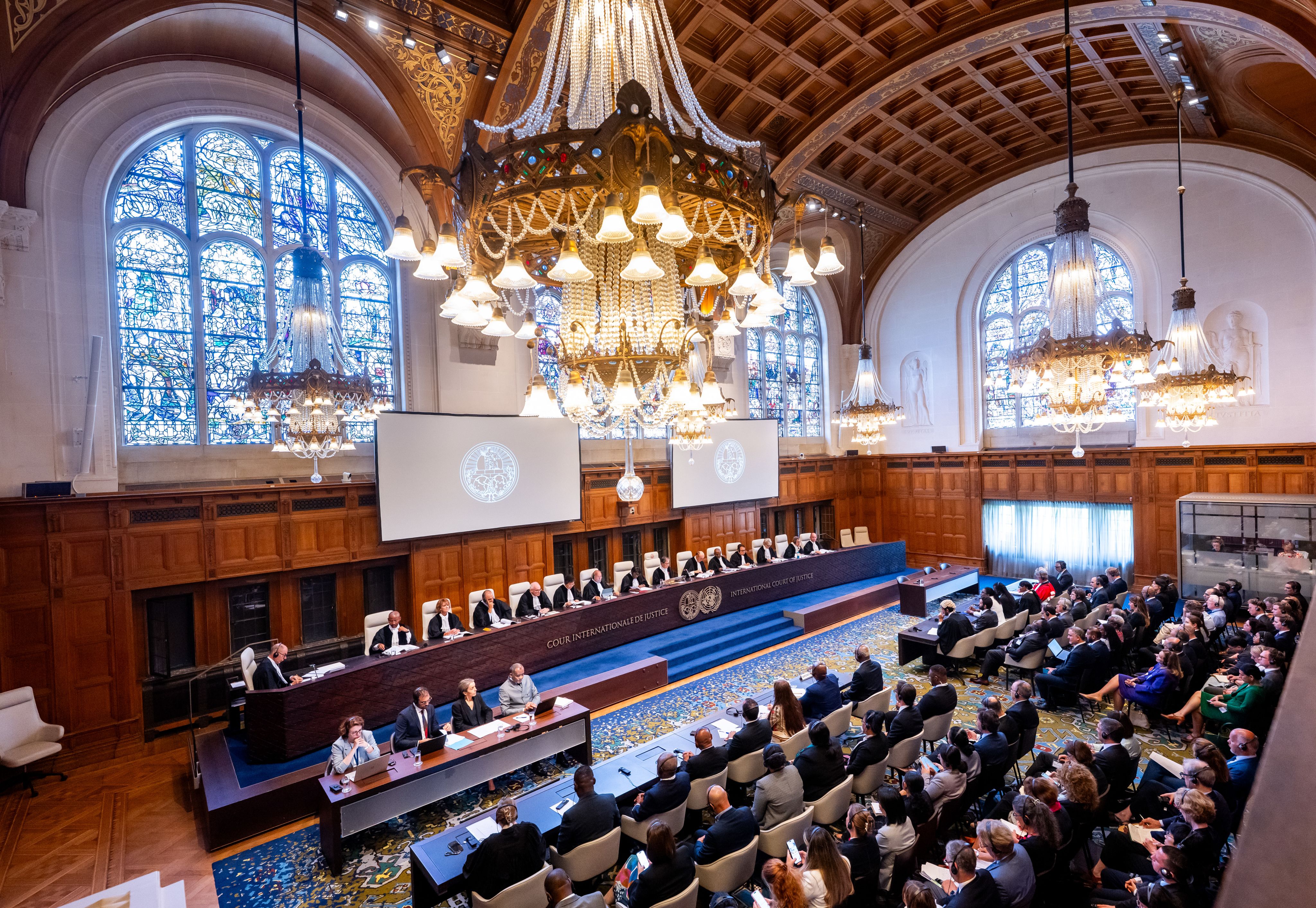
Over the decade since the Protection Agenda was released, the scope of litigation concerning displacement in the context of disasters and climate change has expanded. The Advisory Opinion on the Climate Emergency and Human Rights, issued by the Inter-American Court of Human Rights in May 2025, briefly acknowledges the importance of the Human Rights Committee’s views in Teitiota v New Zealand, before engaging in a much more detailed treatment of internal displacement and planned relocation. Drawing on the Protection Agenda at numerous points, the Advisory Opinion synthesizes international standards and guidelines into specific types of conduct that States should adopt in order to respect, protect and fulfil rights to life, housing, property and freedom of movement, among others. Similar guidance from the African Court on Human and Peoples’ Rights can be expected, following a 2025 petition that includes descriptions of cross-border and internal displacement amongst the adverse impacts of climate change facing people on the continent. This kind of guidance can help to define the contours of a global strategic litigation initiative that addresses both internal and cross-border displacement.
Litigation addressing dimensions of internal displacement and planned relocation has been brought across jurisdictions in Africa, the Americas, Europe, Southeast Asia, South Asia and Oceania. Many of these claims have a strategic quality. For instance, the claimants in Billy v Australia were represented by ClientEarth, which describes itself as using ‘the power of the law to drive transformational change – creating, strengthening and enforcing the right rules to support a healthy planet where nature and people can thrive together’. The pathbreaking Sentencia T-123 de 2024 judgment from the Colombian Constitutional Court was brought by strategic litigators at the Grupo de Acciones Públicas at the Universidad del Rosario.
Cases like these raise claims relating to failures to facilitate evacuation and to protect people during displacement; failures of the State to prevent displacement through investing in climate adaptation, as well as scenarios where the State causes displacement by advancing adaptation action against community priorities. Failures to facilitate relocation have been challenged, as have claims in cases where displacement results from investment in green energy initiatives that respond to the imperative to reduce greenhouse gas emissions. The variety of claims reflected in this list have not yet been coordinated under a single strategic litigation umbrella focusing on climate-related human mobility. However, the consolidation of these kinds of cases in the Climate Mobility Case Database, facilitated by research funding for the AdjuDisplace project I lead, provides a platform for legal analysis and dissemination of insights relevant to strategic litigation from local to international levels. Our ambition is that the database, complemented by coordinated learning and knowledge exchanges, will facilitate ongoing transnational legal dialogue and action that will advance transformational jurisprudence.
Conclusions
Strategic litigation is likely to play a far more important role in the next 10 years than it did in the last. Advances in legal doctrine concerning States’ non-refoulement obligations have laid the foundation for international protection claims. Similarly, litigation concerning the varieties of climate-related internal displacement and planned relocation point towards a growing engagement by justice sector actors with these issues.
The Protection Agenda did not call for strategic litigation, and neither the Nansen Initiative nor the PDD worked specifically towards these outcomes. Nonetheless, by advancing a coherent, empirically grounded narrative linking cross-border displacement with various forms of internal climate-related movements, and the associated imperatives of climate adaptation and disaster risk reduction, the process was instrumental in providing both a language and foundational principles that have inspired transformative legal action.
Matthew Scott is Associate Professor of Public International Law at the Raoul Wallenberg Institute of Human Rights and Humanitarian Law and Adjunct Senior Lecturer at the Faculty of Law at Lund University in Sweden.
About the Nansen Initiative +10 blog
In 2015, more than 100 governments around the world endorsed the Nansen Initiative’s Protection Agenda – an Agenda for the Protection of Cross-Border Displaced Persons in the context of Disasters and Climate Change. In this commemorative blog, leading experts reflect on subsequent developments in key priority areas identified in the Nansen Initiative Protection Agenda, including protection and solutions for people displaced in the context of disasters and climate change, and the integration of human mobility within disaster risk reduction and climate change adaptation strategies.




 Built with Shorthand